
The curved TV was once promoted as the next big breakthrough in home entertainment. Major manufacturers showcased sleek displays with gently curved panels, promising a viewing experience that felt more cinematic and immersive than conventional flat-screen televisions. Walk into an electronics store around 2014 or 2015, and curved televisions occupied premium shelf space with futuristic marketing campaigns designed to convince buyers that flat TVs would soon become history. Fast forward to 2026, and the landscape looks very different. Most manufacturers have shifted their attention toward OLED, Mini-LED, Micro RGB, AI-powered image processing, and improved HDR technologies, leaving curved televisions as a niche product rather than an industry standard. Industry analysts and technology publications also note that curved TVs have largely been replaced by newer innovations focused on picture quality instead of screen shape.
Even though they are no longer mainstream, curved televisions continue to attract attention from home theater enthusiasts and bargain hunters looking at the second-hand market. Many people still wonder whether a curved display genuinely improves immersion or whether it was simply a clever marketing experiment. The answer lies somewhere between those two extremes. Curved TVs offer real benefits under the right conditions, but they also come with limitations that prevented them from becoming the universal replacement for flat screens. This guide explores every important aspect of curved televisions so you can make an informed buying decision.
What Is a Curved TV?
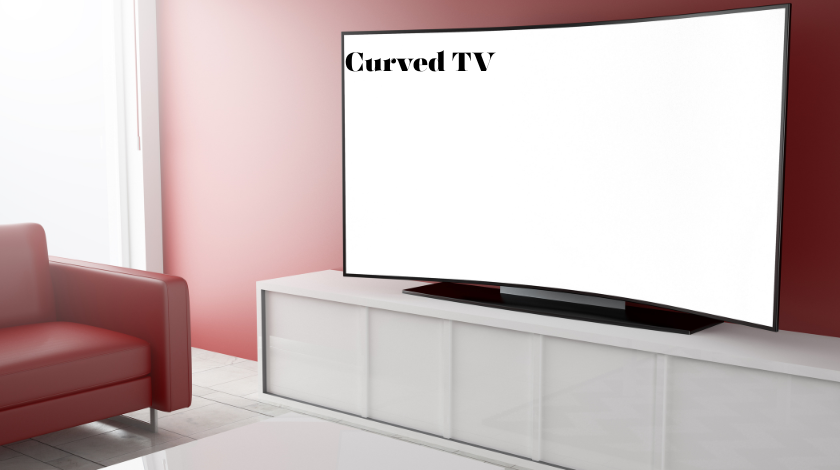
A curved TV features a display panel that bends slightly inward toward the viewer rather than remaining completely flat. The design attempts to match the natural curvature of the human field of vision, allowing every part of the screen to sit at a more consistent distance from your eyes. In theory, this creates a stronger sense of immersion, particularly on larger displays where the curve becomes more noticeable.
Unlike older CRT televisions that happened to have curved glass because of engineering limitations, modern curved TVs intentionally use a carefully calculated radius. Manufacturers often described this as wrapping the image around the viewer to create a theater-like experience. The effect is most noticeable when sitting directly in front of the television at the recommended viewing distance. When viewed from the side, however, the benefits quickly diminish.
How Curved Screens Work
The screen curvature reduces the difference in distance between the center and edges of the display. Instead of your eyes traveling across a perfectly flat plane, they follow a gentle arc. On very large screens, this can make action scenes and panoramic landscapes feel slightly more engaging.
The Evolution of Curved Television Technology
Samsung and LG were among the pioneers of curved OLED and LED televisions. Premium models often combined 4K resolution, HDR support, and OLED technology with curved displays to create products aimed at luxury home theater buyers. Over time, manufacturers discovered that customers cared far more about improvements in brightness, color accuracy, and contrast than the physical shape of the screen. As a result, curved TVs gradually disappeared from new product lineups.
Why Manufacturers Introduced Curved TVs
Curved televisions were designed to solve a challenge facing premium TV makers: how do you convince consumers to upgrade when resolution alone is no longer enough? After Full HD and 4K became common, companies searched for new ways to differentiate their flagship models.
The Goal of an Immersive Viewing Experience
Manufacturers argued that a curved screen surrounds the viewer’s peripheral vision more effectively than a flat display. Sitting in the center of the screen makes movies appear larger and creates a subtle illusion of depth without requiring 3D glasses.
The Marketing Appeal
The curved design also served another purpose it looked futuristic. Retail showrooms displayed curved TVs in carefully controlled environments where they immediately attracted attention. The unique shape became a visual symbol of premium technology, helping justify higher prices.
Advantages of Curved TVs
Despite their decline in popularity, curved televisions still offer genuine benefits under specific circumstances.
Enhanced Immersion
When watching movies alone or with one other person, a curved display can produce a more engaging viewing experience. The slight wraparound effect encourages viewers to focus on the action rather than the room around them.
Improved Perceived Depth
Many owners describe curved TVs as creating a subtle sense of three-dimensional depth, especially when viewing nature documentaries, sports, or cinematic films with sweeping landscapes.
Reduced Edge Distortion
Because the edges of the display angle slightly toward the viewer, some users perceive less geometric distortion compared with large flat screens. Research into curved displays has also shown that central viewing positions can improve user comfort and pointing performance on large displays.
| Feature | Curved TV | Flat TV |
|---|---|---|
| Immersion | Excellent (center seating) | Very Good |
| Side Viewing | Limited | Excellent |
| Wall Mounting | Less Attractive | Ideal |
| Availability | Limited | Widely Available |
| Best Screen Size | 55 inches and above | All sizes |
Disadvantages of Curved TVs
Curved televisions ultimately failed to dominate the market because their disadvantages outweighed their benefits for many households.
Viewing Angle Limitations
The immersive effect only works well when viewers sit directly in front of the television. Anyone seated to the side may experience distorted geometry or reduced picture consistency.
Reflection Issues
Curved panels can reflect light from multiple angles, making glare more noticeable in brightly lit rooms. Careful room lighting becomes increasingly important.
Higher Prices and Limited Availability
Today, finding a brand-new curved television is significantly more difficult than buying a flat TV. Most manufacturers have discontinued consumer curved TV lines, focusing instead on display technologies such as OLED, Mini-LED, and Micro RGB.
Curved TV vs Flat TV
This comparison remains one of the most common questions among TV buyers.
Picture Quality Comparison
Picture quality depends far more on panel technology than screen shape. A flat OLED television will almost always outperform an older curved LED television in terms of contrast, brightness, HDR performance, and black levels.
Gaming Performance
Gamers who sit directly in front of the display sometimes enjoy the immersive feeling of curved screens. This explains why curved gaming monitors remain popular even though curved televisions have declined.
Which One Offers Better Value?
For most buyers, a flat television delivers better overall value because it offers wider seating flexibility, easier wall mounting, and a much larger selection of models across every price range.
Are Curved TVs Still Worth Buying?
The answer depends on your priorities.
If you discover a high-end curved OLED or premium Samsung curved TV at an attractive second-hand price, it can still deliver an excellent movie experience. Many older flagship models continue to offer impressive 4K performance, HDR support, and premium build quality.
If you’re purchasing a brand-new television, however, experts generally recommend prioritizing technologies such as OLED, Mini-LED, refresh rate, HDR capability, and image processing instead of screen curvature. Industry attention has clearly shifted toward these innovations, while curved TVs have become a niche product.
Although some market research firms project ongoing demand in specialized segments, mainstream consumer electronics brands no longer treat curved TVs as a flagship category. Much of the remaining market consists of replacement purchases, commercial applications, and enthusiasts rather than mass-market buyers.
Conclusion
Curved televisions represent one of the most interesting experiments in modern television history. They introduced a fresh design philosophy that genuinely improved immersion for viewers sitting in the optimal position. At the same time, practical issues including limited viewing angles, wall-mounting challenges, reflections, and higher costs prevented widespread adoption.
For today’s buyers, picture quality matters far more than screen shape. Features like OLED panels, Mini-LED backlighting, HDR performance, high refresh rates, and advanced AI image processing provide far more noticeable improvements than a curved display. If you already own a premium curved TV, there is little reason to replace it solely because of its shape. If you’re buying new, a modern flat-screen television will usually provide the best combination of performance, flexibility, and long-term value.
FAQs
1. Are curved TVs better than flat TVs?
Not for most people. Curved TVs can feel more immersive when viewed from the center, but flat TVs offer better viewing angles and greater versatility.
2. Why did curved TVs become less popular?
Manufacturers found that consumers preferred improvements in display technology, brightness, HDR, and OLED panels rather than curved screen designs.
3. Is a curved TV good for gaming?
Yes, especially for single-player gaming where the player sits directly in front of the screen.
4. Can you wall-mount a curved TV?
Yes. Most curved TVs support wall mounting, although the appearance may not be as flush as a flat television.
5. Should I buy a used curved TV in 2026?
If it’s a premium model in excellent condition and offered at a competitive price, it can still be a worthwhile purchase. Compare its features with similarly priced modern flat TVs before deciding.