
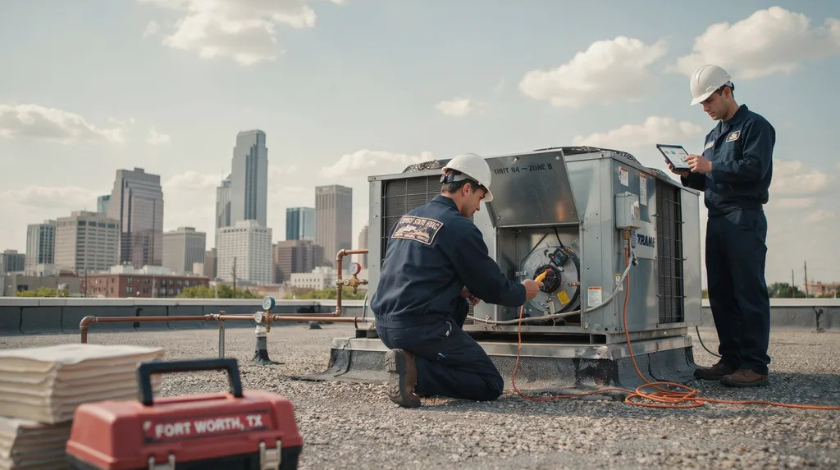

Commercial HVAC systems are the invisible engines that keep businesses operating efficiently throughout the year. Whether it’s an office tower, a retail center, a manufacturing facility, or a healthcare clinic, maintaining comfortable indoor temperatures is critical for employee productivity, customer satisfaction, and equipment performance. Unlike residential systems that typically serve a single household, commercial HVAC systems are designed to handle larger spaces, higher occupancy levels, and more complex airflow requirements.
A commercial HVAC system consists of multiple interconnected components working together to regulate heating, cooling, ventilation, humidity, and indoor air quality. These systems are often customized based on the building’s size, occupancy patterns, and operational demands. In Fort Worth, where summer temperatures regularly climb above 90°F and frequently exceed 100°F during heat waves, commercial HVAC systems face constant pressure to perform reliably. Industry data shows that the region experiences over 100 days annually with temperatures above 90°F, making HVAC performance a critical business necessity rather than a luxury.
The role of HVAC extends beyond comfort. Modern businesses increasingly depend on climate-controlled environments to protect sensitive equipment, preserve inventory, and comply with workplace regulations. Think of a commercial HVAC system as the circulatory system of a building. When it operates efficiently, everything runs smoothly. When it fails, productivity, revenue, and customer experiences can suffer almost immediately.
What Makes Commercial HVAC Different from Residential Systems
Commercial HVAC systems are significantly larger and more sophisticated than residential units. They often use zoning technology to control temperatures in different sections of a building independently. This flexibility helps businesses reduce energy consumption while maintaining comfort in occupied areas.
Commercial systems also prioritize scalability. As businesses grow or renovate their facilities, HVAC systems must adapt to changing requirements. This adaptability often involves advanced controls, variable-speed motors, and integrated building management systems that continuously monitor performance.
Core Components of a Commercial HVAC System
The primary components include air handlers, ductwork, thermostats, compressors, condensers, ventilation systems, and filtration units. Many modern systems also incorporate smart sensors and automation technologies that optimize energy use while maintaining indoor comfort.
Why Commercial HVAC Matters in Fort Worth
Fort Worth’s climate creates unique challenges for commercial buildings. Long, hot summers and unpredictable weather patterns place substantial demands on cooling systems. Businesses that underestimate the importance of HVAC often discover the consequences through rising energy bills, equipment failures, and employee complaints.
The Dallas-Fort Worth region continues to experience strong commercial development, industrial expansion, and population growth. New construction activity across the metroplex remains robust, creating increasing demand for commercial HVAC installation and maintenance services. Texas’ HVAC market reached approximately $11.4 billion in 2025, driven largely by urban expansion and commercial construction.
Comfort directly impacts workplace performance. Studies consistently show that employees work more effectively in environments with stable temperatures and good air quality. Customers are also more likely to stay longer and spend more money in comfortable retail environments. HVAC systems influence everything from customer retention to employee morale.
Fort Worth Climate Challenges
Fort Worth’s heat places extraordinary stress on commercial HVAC equipment. Extended cooling seasons mean systems operate for more hours annually than in many other parts of the country. This increased workload accelerates wear and tear and makes preventive maintenance essential.
Humidity management is another critical concern. Excess moisture can create uncomfortable conditions, encourage mold growth, and damage building materials. Commercial HVAC systems must balance temperature control with humidity regulation to maintain optimal indoor environments.
Impact on Business Operations
A malfunctioning HVAC system can quickly become a costly problem. Restaurants may lose customers, offices may experience reduced productivity, and manufacturing facilities may face equipment disruptions. Reliable HVAC performance is directly linked to operational continuity.
Types of Commercial HVAC Systems
Choosing the right HVAC system depends on building size, occupancy, budget, and operational requirements. Several technologies dominate the commercial market in Fort Worth.
Rooftop Units (RTUs)
Rooftop units remain one of the most popular commercial HVAC solutions. Installed on building roofs, these systems save valuable interior space while providing efficient heating and cooling. RTUs are commonly used in retail centers, office buildings, and restaurants.
Their popularity stems from accessibility and flexibility. Maintenance technicians can service rooftop units without disrupting daily business operations. Many modern RTUs include energy-saving features such as variable-speed fans and advanced controls.
VRF and VRV Systems
Variable Refrigerant Flow (VRF) systems have gained significant popularity due to their exceptional efficiency. These systems allow individual temperature control in different zones, making them ideal for office buildings, hotels, and mixed-use properties.
VRF systems adjust refrigerant flow based on real-time demand. Instead of operating at full capacity continuously, they deliver only the cooling or heating needed at any given moment. This approach significantly reduces energy consumption.
Chillers and Boiler Systems
Large commercial and industrial facilities often rely on centralized chillers and boilers. These systems can serve extensive building complexes efficiently and are particularly common in hospitals, universities, and manufacturing facilities.
| System Type | Best For | Energy Efficiency | Installation Cost |
|---|---|---|---|
| Rooftop Units | Retail, Offices | Moderate to High | Moderate |
| VRF Systems | Hotels, Offices | Very High | Higher |
| Chillers | Large Facilities | High | High |
| Boilers | Industrial Applications | High | Moderate to High |
Industries That Depend on Commercial HVAC
Virtually every commercial sector in Fort Worth relies on HVAC systems, but some industries have particularly demanding requirements.
Offices and Corporate Buildings
Office environments require consistent temperatures and superior air quality to support employee productivity. Poor ventilation can lead to discomfort, fatigue, and reduced concentration. Modern office HVAC systems increasingly integrate smart controls that adjust settings based on occupancy and usage patterns.
Retail Stores and Restaurants
Retailers depend on HVAC systems to create welcoming customer experiences. Temperature fluctuations can discourage shoppers and negatively impact sales. Restaurants face additional challenges, including kitchen heat, ventilation requirements, and customer comfort expectations.
Warehouses and Industrial Facilities
Industrial facilities often require specialized HVAC solutions to manage heat generated by equipment and manufacturing processes. Warehouses also depend on climate control to protect inventory and maintain employee safety.
The Dallas-Fort Worth industrial real estate market continues to grow, with strong absorption rates and ongoing development creating increasing demand for commercial HVAC services.
Commercial HVAC Installation in Fort Worth
A successful commercial HVAC installation begins with detailed planning. Every building has unique requirements, and selecting the wrong system can lead to inefficiencies and unnecessary expenses for years.
Engineers evaluate building size, occupancy patterns, insulation levels, window placement, and operational needs before designing a system. Proper load calculations are essential because oversized or undersized equipment can reduce efficiency and shorten equipment lifespan.
Planning and Design Considerations
Effective HVAC design involves balancing comfort, efficiency, and long-term operating costs. Modern systems often incorporate building automation technologies that continuously optimize performance based on real-time conditions.
Future growth should also be considered during system design. Businesses planning expansion may benefit from scalable HVAC solutions that can accommodate additional space without requiring complete replacement.
Building Codes and Compliance
Commercial HVAC installations in Texas must comply with state and local regulations. Businesses should ensure contractors possess the appropriate licensing and certifications. Experts recommend verifying that commercial HVAC contractors hold the proper Texas licensing required for large commercial projects.
Maintenance and Preventive Service
If installation is the foundation of HVAC performance, maintenance is the insurance policy that protects it. Preventive maintenance helps identify potential issues before they become expensive emergencies.
Fort Worth’s climate makes regular maintenance particularly important. Dust, heat, and prolonged operating hours place significant stress on HVAC components. Industry estimates suggest annual maintenance costs for rooftop units can range from several hundred to several thousand dollars depending on system size and complexity.
Benefits of Scheduled Maintenance
Routine maintenance offers several advantages:
- Lower energy consumption
- Reduced repair costs
- Longer equipment lifespan
- Improved indoor air quality
- Fewer unexpected breakdowns
A well-maintained HVAC system can operate efficiently for many years beyond its expected lifespan, providing substantial long-term savings.
Common Commercial HVAC Problems
Common issues include refrigerant leaks, clogged filters, faulty thermostats, electrical failures, and airflow restrictions. Addressing these problems early helps avoid costly downtime and emergency repairs.
Energy Efficiency and Cost Savings
Energy expenses represent one of the largest operational costs for many commercial buildings. HVAC systems typically account for a significant portion of total energy consumption, making efficiency upgrades highly attractive.
The HVAC industry is experiencing strong demand for energy-efficient technologies as businesses seek to reduce operating costs and meet sustainability goals. Leading manufacturers continue reporting increased demand for advanced cooling solutions and energy-efficient equipment.
Smart Controls and Building Automation
Smart thermostats and building automation systems provide unprecedented control over HVAC performance. These technologies monitor occupancy, weather conditions, and energy usage in real time.
Imagine driving a car that automatically adjusts speed, fuel consumption, and route selection to maximize efficiency. That’s essentially what modern building automation systems do for HVAC equipment.
High-Efficiency Equipment Upgrades
Upgrading to high-efficiency systems can significantly reduce utility costs. Features such as variable-speed compressors, energy recovery ventilators, and advanced filtration systems contribute to improved performance and lower operating expenses.
As refrigerant regulations evolve, businesses should also evaluate aging equipment proactively. Industry experts anticipate rising costs for maintaining older HVAC systems due to refrigerant transitions and tightening supply availability.
Choosing the Right Commercial HVAC Contractor
Selecting a qualified contractor can determine the success or failure of a commercial HVAC project. Experience, technical expertise, and service responsiveness all play crucial roles.
Qualities to Look For
The best commercial HVAC contractors typically offer:
- Extensive commercial experience
- Proper licensing and insurance
- Preventive maintenance programs
- Emergency service capabilities
- Strong customer references
- Energy efficiency expertise
Businesses should request case studies and references from similar projects before making a decision.
Questions to Ask Before Hiring
Before signing a contract, ask potential contractors about maintenance plans, warranty coverage, emergency response times, and system monitoring capabilities. Transparency during the evaluation process often reflects future service quality.
Future Trends in Commercial HVAC
The commercial HVAC industry is evolving rapidly. Artificial intelligence, automation, and predictive maintenance technologies are reshaping how buildings manage climate control.
Data centers, advanced manufacturing facilities, and smart buildings are driving demand for sophisticated cooling solutions. Companies specializing in energy-efficient and modular HVAC technologies are experiencing significant growth due to these emerging opportunities.
AI, Automation, and Smart Buildings
Artificial intelligence enables HVAC systems to predict maintenance needs, optimize energy usage, and automatically adjust settings based on occupancy patterns. Smart sensors continuously collect performance data, allowing facility managers to identify issues before they impact operations.
The future of commercial HVAC resembles a living ecosystem where equipment, sensors, and software communicate seamlessly. Buildings become more responsive, efficient, and sustainable while reducing operational costs.
Conclusion
Commercial HVAC in Fort Worth is far more than a building utility. It is a strategic investment that affects employee productivity, customer satisfaction, energy efficiency, and long-term profitability. With Fort Worth’s demanding climate, businesses cannot afford to treat HVAC as an afterthought.
From rooftop units and VRF systems to advanced automation and predictive maintenance, today’s commercial HVAC solutions offer powerful opportunities to improve performance while reducing costs. As commercial development continues expanding across the Fort Worth region, investing in efficient, reliable HVAC infrastructure will remain essential for business success.
Companies that prioritize proper system design, preventive maintenance, and energy-efficient upgrades position themselves for stronger operational performance and lower long-term expenses. In a competitive business environment, a dependable commercial HVAC system can become one of the most valuable assets a facility owns.
FAQs
1. How often should a commercial HVAC system be serviced in Fort Worth?
Most commercial HVAC systems should receive professional maintenance at least twice annually, typically before the cooling and heating seasons begin. High-demand facilities may require quarterly inspections.
2. What is the average lifespan of a commercial HVAC system?
A well-maintained commercial HVAC system generally lasts between 15 and 25 years, depending on equipment type, operating conditions, and maintenance quality.
3. What is the most energy-efficient commercial HVAC system?
VRF systems are often considered among the most energy-efficient options because they provide precise temperature control and adjust output based on real-time demand.
4. Why are HVAC costs increasing in 2026?
Industry-wide refrigerant transitions, rising equipment costs, labor shortages, and evolving efficiency standards are contributing to higher HVAC installation and replacement expenses.
5. How do I choose the best commercial HVAC contractor in Fort Worth?
Look for contractors with commercial experience, proper licensing, strong references, maintenance programs, emergency support capabilities, and expertise in energy-efficient technologies.