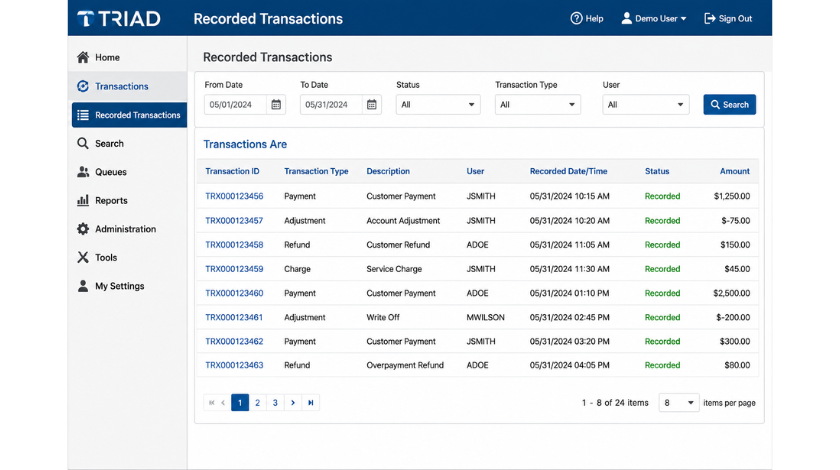

If you’ve noticed a bank or credit card statement entry reading “Recorded TriadScreen.com Transactions”, it’s natural to wonder where it came from. Many payment processors display merchant names that differ slightly from the website or service you interacted with, making unfamiliar transaction descriptions fairly common. Before assuming fraud, it’s important to determine whether the charge matches a purchase, subscription, or service you or someone with access to your payment method authorized.
The phrase itself generally refers to a merchant descriptor associated with a payment processed for or through TriadScreen.com. Merchant descriptors are the labels that appear on financial statements to help identify the business that received the payment. While they are intended to be recognizable, they can sometimes look unfamiliar due to payment processor formatting or abbreviated business names.
What Is TriadScreen.com?
According to the company’s website, TriadScreen.com is a technology-focused platform that publishes content about blockchain, cybersecurity, and quantum computing. The site describes itself as an educational resource offering articles, analysis, and insights into emerging technologies rather than an online retail marketplace.
At the time of writing, there is no public indication on the website that it operates as a major payment processor or financial institution. If a charge referencing TriadScreen.com appears on your statement, it may be connected to a subscription, digital service, advertising, or another product associated with the business. The exact purpose of the charge should be confirmed by reviewing your purchase history or contacting the merchant directly.
Are TriadScreen.com Transactions Legitimate?
In many cases, yes. A legitimate transaction may appear if you recently:
- Purchased a digital product.
- Signed up for a subscription.
- Paid for an online service.
- Authorized a recurring payment.
A transaction is more likely to be legitimate if the amount matches a recent purchase and the transaction date aligns with your activity.
However, you should investigate further if:
- You have never visited TriadScreen.com.
- The transaction amount is unfamiliar.
- Multiple unexpected charges appear.
- The payment repeats without your authorization.
These situations do not automatically indicate fraud, but they do warrant verification.
Common Reasons You May See the Charge
Several scenarios can explain why a TriadScreen.com transaction appears on your financial statement.
Subscription Renewal
Some online services automatically renew subscriptions after a free trial or at the end of a billing cycle. If you previously enrolled in a recurring plan, the charge may represent an automatic renewal.
Digital Products
If you’ve purchased downloadable content, premium articles, software, or online services, the payment descriptor may reference the business rather than the product itself.
Business Services
Organizations sometimes use merchant descriptors that differ from their public-facing brand. If your employer reimburses technology expenses or you manage multiple online accounts, reviewing invoices can help identify the payment.
How to Verify the Transaction
Before disputing a charge, take a systematic approach.
| Step | Action |
|---|---|
| 1 | Check your email for purchase confirmations or invoices. |
| 2 | Review your subscription history. |
| 3 | Ask authorized family members if they made the purchase. |
| 4 | Compare the amount and date with recent online activity. |
| 5 | Contact the merchant for clarification. |
| 6 | Contact your bank if the charge remains unexplained. |
Following these steps often resolves uncertainty without requiring a formal dispute.
What If You Don’t Recognize the Charge?
If the transaction remains unfamiliar after checking your records, consider taking the following actions promptly:
- Contact your bank or credit card issuer.
- Ask whether additional merchant information is available.
- Request a temporary card freeze if fraud is suspected.
- Monitor your account for additional unauthorized transactions.
- Replace your payment card if advised by your financial institution.
Financial institutions can often provide more detailed merchant information than what appears on your statement and can guide you through the dispute process if necessary.
Tips to Protect Yourself
Whether this charge proves legitimate or not, adopting good financial security practices can reduce the risk of unauthorized transactions.
- Enable transaction alerts through your banking app.
- Use strong, unique passwords for online accounts.
- Turn on multi-factor authentication whenever available.
- Review monthly statements carefully.
- Cancel subscriptions you no longer use.
- Avoid saving payment information on unfamiliar websites.
These simple habits make it easier to identify suspicious activity early.
Conclusion
A statement entry labeled “Recorded TriadScreen.com Transactions” generally refers to a payment associated with TriadScreen.com or a related merchant descriptor. The descriptor alone does not indicate fraud. The best approach is to compare the charge against your recent purchases, subscriptions, and email receipts. If you still cannot identify the payment, contact the merchant and then your bank to verify the transaction or initiate a dispute if appropriate.
FAQs
1. Is a TriadScreen.com transaction always fraudulent?
No. Many unfamiliar merchant descriptors represent legitimate purchases or recurring subscriptions. Always verify the charge before reporting fraud.
2. How can I identify who charged my card?
Review your purchase history, search your email for receipts, and ask your bank for expanded merchant information.
3. Can recurring subscriptions appear under different names?
Yes. Businesses sometimes use legal entity names or payment processor descriptors instead of their consumer-facing brand.
4. Should I dispute the charge immediately?
Only after confirming that neither you nor an authorized user made the purchase. Contacting the merchant first may resolve the issue more quickly.
5. What should I do if my bank confirms the transaction is unauthorized?
Request that your card be blocked or replaced, dispute the charge, and continue monitoring your account for any additional suspicious activity.