
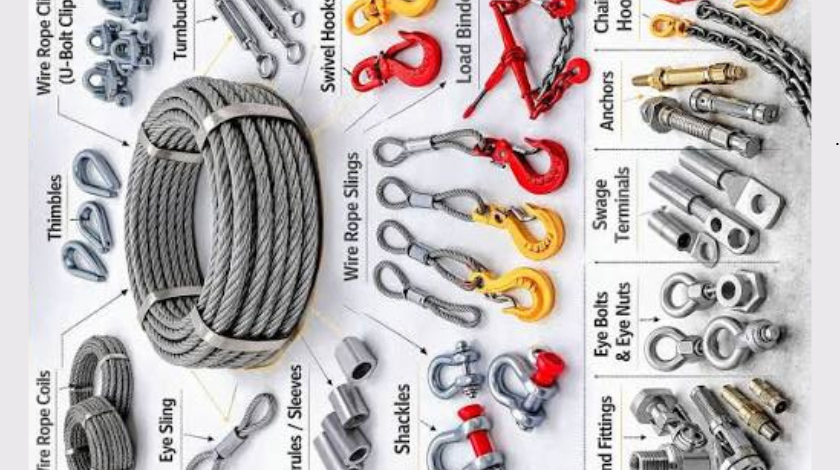

Lifting slings are among the most important pieces of equipment used in material handling, construction, manufacturing, shipping, and warehouse operations. They serve as the connection between a lifting device such as a crane or hoist and the load being moved. While slings may appear simple, choosing the wrong one can lead to equipment damage, dropped loads, serious injuries, or even fatalities. That is why proper sling selection is a critical part of every lifting operation.
There are three primary types of lifting slings: wire rope slings, chain slings, and synthetic slings. Each type is engineered for specific applications and offers unique strengths and limitations. The decision isn’t based on personal preference or cost alone. Instead, professionals evaluate several factors, including the weight of the load, the load’s shape, environmental conditions, lifting angles, temperature exposure, and the potential for abrasion or chemical contact.
Think of choosing a sling like choosing the right tires for a vehicle. You wouldn’t use racing tires on a muddy construction site, and you wouldn’t use off-road tires on a Formula One car. Likewise, every sling has an ideal application where it performs safely and efficiently. Understanding these differences helps operators reduce risk while extending the lifespan of their lifting equipment.
Why Sling Selection Matters
Selecting the correct sling is about much more than lifting capacity. Every lift presents unique challenges, and the wrong sling can fail even if the load appears to be within its rated capacity. Factors such as sharp edges, uneven weight distribution, dynamic loading, and environmental exposure all influence sling performance. A properly selected sling provides not only enough strength but also the flexibility and durability needed for the specific task.
Safety organizations emphasize that every sling has a Working Load Limit (WLL) that must never be exceeded. This rating already includes an engineering safety factor, but it assumes the sling is in good condition and used correctly. Changes in lifting angle or hitch configuration can significantly reduce the effective lifting capacity, making proper planning essential before every lift.
Using the right sling also improves productivity. A chain sling may withstand repeated heavy industrial lifting with minimal wear, while a synthetic sling may protect expensive finished equipment from scratches. Choosing correctly minimizes downtime, reduces equipment replacement costs, and helps maintain a safer workplace.
Basic Components of a Sling
Although sling designs vary, most lifting slings share several common components. These include the lifting body, end fittings, identification tags, and protective features. The lifting body carries the load, while hooks, rings, shackles, or other hardware connect the sling to both the lifting equipment and the load itself. Every sling should also have a readable identification tag showing its Working Load Limit, material type, manufacturer, and inspection information.
Many slings incorporate protective sleeves or reinforced eyes to reduce wear in high-friction areas. Synthetic slings often include abrasion-resistant covers, while wire rope slings may feature mechanically spliced or hand-tucked eyes. Chain slings typically use alloy steel links combined with adjustable shortening hooks that allow operators to modify the sling length for uneven loads.
Routine inspections focus on these components because damage to any part of the sling can compromise the entire lifting system. Missing tags, worn hooks, broken wire strands, stretched chain links, or torn synthetic fibers are all warning signs that a sling should be removed from service until properly evaluated or replaced.
The Three Main Types of Lifting Slings
Although dozens of sling designs exist, nearly all industrial lifting slings fall into three major categories. Understanding how each one performs under different conditions is the foundation of safe rigging practices. Each material has characteristics that make it particularly suitable for certain industries while making it less appropriate for others.
Wire rope slings excel in heavy construction and general industrial lifting because they combine strength with flexibility. Chain slings are preferred where durability and resistance to heat are critical. Synthetic slings offer outstanding protection for delicate loads while remaining lightweight and easy to handle. None of these options is universally better than the others; the correct choice depends entirely on the lifting situation.
Professional riggers evaluate every lift individually rather than relying on habit. Even when two loads weigh the same, differences in surface finish, temperature, balance, or environmental exposure may require completely different sling types. This careful evaluation helps ensure that each lift is completed efficiently while minimizing risk to workers and equipment.
Wire Rope Slings
Wire rope slings are one of the most widely used types of lifting slings because they provide an excellent combination of strength, flexibility, and resistance to harsh working conditions. They are made by combining multiple strands of steel wire twisted together around a central core, creating a durable lifting tool capable of handling heavy loads. These slings are commonly found in construction sites, oil and gas operations, shipyards, manufacturing facilities, and heavy equipment industries where large and demanding lifts are performed regularly.
One of the biggest advantages of wire rope slings is their high strength-to-weight ratio. They can handle extremely heavy loads while remaining relatively lightweight compared with other lifting options. Their flexibility allows them to wrap around different load shapes, making them useful for a wide range of applications. Wire rope also performs well in environments where abrasion, impact, and general wear are common, which is why many industrial operations rely on them for repetitive lifting tasks.
However, wire rope slings are not ideal for every situation. They can be damaged by sharp edges, severe kinking, corrosion, or crushing forces. Regular inspections are essential because small issues, such as broken wire strands or deformation, can indicate that the sling is no longer safe to use. Operators must also consider environmental factors because moisture, chemicals, and extreme conditions can weaken the steel over time.
Wire rope slings are often selected when the priority is durability and heavy lifting capacity. For example, moving steel beams at a construction site or lifting machinery in a manufacturing plant usually requires a sling that can withstand significant forces. Their proven performance makes them a standard choice in many industries where reliability is essential.
Chain Slings
Chain slings are designed for some of the toughest lifting environments. Made from high-strength alloy steel chain, these slings are valued for their exceptional durability, resistance to heat, and ability to handle rugged conditions. They are commonly used in foundries, steel mills, fabrication facilities, and heavy industrial operations where other sling materials may not perform as effectively.
The major advantage of chain slings is their toughness. Unlike synthetic slings, chains are not easily damaged by sparks, sharp edges, or high temperatures. They can tolerate rough handling and repeated use without losing their strength quickly when properly maintained. This makes them especially valuable in industries where loads may be hot, abrasive, or difficult to handle.
Another benefit of chain slings is their versatility. They can be configured in different arrangements, including single-leg, double-leg, triple-leg, and basket configurations. Adjustable chain lengths also allow operators to balance uneven loads more effectively. This flexibility makes chain slings suitable for lifting machinery, structural components, and heavy industrial equipment.
Despite their advantages, chain slings have some limitations. They are heavier than synthetic alternatives, which can make handling more difficult during setup. They can also damage delicate surfaces if used without proper protection. Additionally, damaged chain links, stretched sections, cracks, or bent components require immediate removal from service because chain failure can result in sudden and dangerous load drops.
Chain slings are usually chosen when strength, durability, and heat resistance are more important than lightweight handling. A steel fabrication facility moving hot metal components, for example, would typically prefer chain over synthetic materials because the environment demands a more rugged solution.
Synthetic Slings
Synthetic slings are made from high-strength materials such as nylon or polyester and are popular because they are lightweight, flexible, and gentle on loads. They are commonly used in industries where protecting the surface of the lifted object is important. Manufacturing plants, aerospace facilities, transportation companies, and maintenance operations often use synthetic slings to move expensive equipment without causing scratches or surface damage.
One of the most significant benefits of synthetic slings is their flexibility. They can easily conform to the shape of irregular loads, creating a secure grip without damaging delicate surfaces. Compared with steel alternatives, synthetic slings are much easier for workers to carry, position, and store. This reduces physical strain and can improve efficiency during lifting operations.
Synthetic slings also offer excellent versatility. They are available in several forms, including web slings and round slings, each designed for specific applications. Web slings provide a wide load-bearing surface, while round slings offer flexibility and excellent load distribution. Both types can be used in different hitch configurations depending on the lifting requirements.
However, synthetic slings require careful handling. They are more vulnerable to cuts, abrasion, heat damage, and certain chemicals. A small tear or burn can significantly reduce their strength, even if the damage is not immediately obvious. Operators should always inspect synthetic slings before use and avoid dragging them across rough surfaces or exposing them to conditions beyond their rated limits.
Synthetic slings are generally selected when load protection, flexibility, and ease of handling are the main priorities. For example, lifting painted machinery, aircraft components, or finished products often requires a sling that provides strength without damaging the item being moved.
Factors That Determine Which Sling You Should Use
Choosing the correct sling involves evaluating multiple factors rather than simply matching the sling to the weight of the load. A safe lifting plan considers the entire working environment, the characteristics of the load, and the demands placed on the sling during the operation. Professional riggers analyze these details before every lift because conditions can change from one job to another.
The most important factors include:
| Factor | Why It Matters |
|---|---|
| Load weight | Determines the required sling capacity |
| Load shape | Affects balance and sling configuration |
| Surface condition | Determines protection requirements |
| Temperature | Influences material performance |
| Chemicals | Some materials may degrade under exposure |
| Hitch type | Changes lifting capacity |
| Frequency of use | Determines required durability |
Understanding these factors helps prevent choosing a sling that is technically strong enough but unsuitable for the actual conditions. A sling should always match both the load and the environment in which the lift occurs.
Load Weight and Working Load Limit
The first and most important factor when selecting a sling is the weight of the load. Every sling has a specific Working Load Limit (WLL), which represents the maximum amount of weight it can safely support under certain conditions. Choosing a sling with a WLL lower than the load weight creates a dangerous situation because the sling may stretch, deform, or fail during the lift. A common mistake is assuming that a sling’s physical size automatically determines its capacity, but strength depends on the material, construction, configuration, and angle of the lift.
The load weight must always be calculated accurately before selecting lifting equipment. Guessing the weight or relying on appearance can lead to serious problems, especially when handling machinery, structural materials, or industrial components. A load that looks small may contain dense materials such as steel or concrete and weigh much more than expected. Proper lifting plans identify the exact weight, the center of gravity, and how the load will be supported throughout the movement.
The lifting configuration also affects the actual capacity of the sling. For example, a vertical hitch may allow a sling to support its full rated capacity, while a basket hitch or choker hitch changes the forces applied to the sling. Multiple-leg slings also require careful calculation because the load is not always distributed evenly between each leg. The angle between sling legs can significantly increase tension, meaning a sling system must be selected based on the complete setup rather than just the load weight.
Professionals often choose a sling with additional capacity rather than selecting one that only matches the exact load. This provides an extra margin of safety and accounts for unexpected conditions such as movement, vibration, or minor variations in the lifting process. However, using an oversized sling is not always the best solution because extremely large equipment may become difficult to position correctly. The goal is to select a sling that provides the appropriate balance between safety, efficiency, and practicality.
Load Shape and Center of Gravity
The shape and balance of a load play a major role in determining the correct sling type. Not every object can be lifted the same way. A perfectly balanced rectangular steel block requires a different approach compared with a long pipe, irregular machine component, or fragile finished product. Understanding the shape of the load helps determine whether the sling can grip securely and whether additional rigging equipment is necessary.
The center of gravity is especially important because it determines how the load will behave once it leaves the ground. If the center of gravity is not directly below the lifting point, the load may tilt, rotate, or shift unexpectedly. A properly selected sling configuration helps keep the load stable during lifting and transportation. In some cases, multiple slings or adjustable chain assemblies are used to maintain balance.
Different sling types perform better with different load shapes. Synthetic slings are often excellent for irregular or delicate loads because they wrap around surfaces and distribute pressure evenly. Chain slings may be better for heavy, compact loads with strong attachment points. Wire rope slings offer versatility for many industrial applications but require protection when working around sharp edges.
Load protection is another important consideration. A sling that is strong enough to lift an object may still damage it if the wrong material is used. For example, lifting polished equipment or painted surfaces with a steel sling could cause scratches or deformation. In these situations, a synthetic sling with protective padding may be the safer and more appropriate choice.
Surface Condition
The condition of the load surface can determine whether a sling will perform safely. Smooth, finished surfaces, sharp corners, rough edges, and abrasive materials all interact differently with sling materials. Before selecting a sling, operators must examine the load carefully and identify any features that could damage the sling during lifting.
Sharp edges are particularly dangerous because they can cut synthetic slings and damage wire rope. Even a sling with sufficient lifting capacity can fail if the load creates concentrated pressure on a small area. Protective sleeves, corner guards, and edge protectors are often used to prevent damage and extend sling life. These accessories are especially important when lifting metal plates, machinery components, or structural materials with exposed edges.
Synthetic slings are generally preferred when surface protection is a priority. Their soft material reduces the chance of scratching or marking valuable equipment. However, they must be protected from sharp edges and abrasive surfaces. Wire rope and chain slings are more resistant to rough conditions but may require additional protection when the load surface must remain flawless.
Inspecting the contact points between the sling and the load is an essential part of safe lifting preparation. Operators should ask questions such as: Will the sling rub against a sharp corner? Could the load shift during movement? Is there a possibility of crushing or cutting the sling? Answering these questions before the lift helps prevent avoidable failures.
Temperature and Environment
The surrounding environment is another factor that determines which sling type should be used. Extreme temperatures can affect sling materials in different ways, making some options safer than others for specific applications. A sling that performs well in a normal warehouse may not be suitable near furnaces, chemical processing equipment, or outdoor locations with severe weather conditions.
Chain slings are often chosen for high-temperature environments because alloy steel can withstand heat better than many synthetic materials. Industries such as metal processing, foundries, and manufacturing facilities frequently rely on chain slings when loads are exposed to elevated temperatures. However, even chain slings have temperature limitations, and manufacturers’ guidelines must always be followed.
Synthetic slings require more careful consideration in extreme conditions. High temperatures can weaken synthetic fibers, while freezing temperatures may affect flexibility and durability. Exposure to sunlight, moisture, or outdoor conditions over long periods can also contribute to material degradation. Proper storage and inspection are essential to maintaining their performance.
Wire rope slings provide a middle ground in many industrial environments because they offer durability and resistance to mechanical damage. However, they may experience corrosion when exposed to moisture or certain outdoor conditions without proper maintenance. The correct choice depends on understanding the environment where the lifting operation will take place, not just the load itself.
Chemical Exposure
Chemical exposure is another critical factor when selecting a sling. Different materials react differently when exposed to acids, solvents, oils, cleaning agents, or other industrial chemicals. A sling that appears strong may weaken internally if its material is not compatible with the surrounding environment.
Synthetic slings require special attention because certain chemicals can damage their fibers. Nylon and polyester have different chemical resistance characteristics, meaning the correct synthetic material must be selected based on the substances present in the workplace. Manufacturers provide compatibility information to help determine whether a particular sling is suitable.
Wire rope and chain slings are generally more resistant to many industrial conditions, but they are not immune to chemical damage. Corrosion can weaken metal components over time, reducing their ability to safely support loads. Regular inspections help identify signs of chemical deterioration before a failure occurs.
The safest approach is to evaluate the entire working environment before choosing a sling. Factors such as temperature, chemicals, moisture, and frequency of exposure should all be considered together. The strongest sling is not necessarily the safest sling if it cannot withstand the conditions where it will be used.
Hitch Configuration
The way a sling is attached to a load is another major factor that determines which type of sling should be used. This attachment method is known as the hitch configuration, and it directly affects how forces are distributed throughout the sling. The same sling can have different lifting capacities depending on whether it is used in a vertical hitch, choker hitch, or basket hitch. Understanding these differences is essential because a safe lift depends not only on the sling itself but also on how it is positioned.
A vertical hitch is the simplest configuration, where one end of the sling connects to the lifting device and the other supports the load directly. This setup allows the sling to work at its rated capacity when used correctly. However, the load must remain stable and properly balanced because there is no additional support from wrapping around the object.
A choker hitch involves wrapping the sling around the load and passing one end through a loop or fitting to tighten around the object. This method is useful for controlling long or loose materials, but it generally reduces the sling’s capacity compared with a vertical hitch. The tightening action creates additional stress on the sling, and operators must ensure that the load cannot slide or shift during lifting.
A basket hitch places the sling underneath the load with both ends attached to the lifting point. This configuration can increase lifting capacity because the load is supported by two sections of the sling. However, the increased capacity depends on the load remaining balanced and the sling maintaining the correct angle. If the load shifts or the sling legs spread too widely, the forces can increase significantly.
Choosing the right hitch configuration often determines whether a particular sling type will work effectively. Synthetic slings are frequently used in basket hitches because they distribute pressure across larger areas and protect surfaces. Chain slings may be preferred for choker hitches involving heavy industrial materials. Wire rope slings provide flexibility across many configurations but require careful inspection and proper protection.
Comparing the Three Sling Types
Each sling type has specific advantages that make it suitable for different lifting applications. There is no single sling that is perfect for every situation. The best choice depends on balancing factors such as strength, flexibility, durability, weight, cost, and environmental resistance.
| Sling Type | Main Advantages | Common Applications | Limitations |
|---|---|---|---|
| Wire Rope Sling | High strength, durable, flexible | Construction, heavy machinery, industrial lifting | Can suffer from corrosion, kinking, and broken wires |
| Chain Sling | Extremely durable, heat resistant, adjustable | Steel mills, heavy manufacturing, high-temperature environments | Heavy, can damage delicate surfaces |
| Synthetic Sling | Lightweight, flexible, protects surfaces | Aerospace, manufacturing, equipment handling | Vulnerable to cuts, heat, and chemicals |
Advantages and Disadvantages
Wire rope slings are often considered the all-purpose option for heavy lifting. Their steel construction gives them excellent durability, and they perform well when handling large loads repeatedly. They are especially useful where abrasion resistance and strength are priorities. However, they require frequent inspection because broken wires and internal damage may not always be visible from the outside. Once significant damage occurs, the sling must be removed from service.
Chain slings provide unmatched toughness in demanding environments. Their ability to withstand heat, impact, and rough handling makes them ideal for industries where equipment is exposed to harsh conditions. They can also be adjusted easily using shortening hooks and fittings. The main disadvantages are their weight and potential to damage finished surfaces. Workers must also be trained to identify stretched or damaged chain links because defects can compromise safety.
Synthetic slings offer excellent versatility and ease of use. Their lightweight design allows workers to install them quickly, reducing setup time and physical strain. They are especially valuable when lifting expensive or delicate equipment because they minimize surface damage. The tradeoff is that they require more careful handling and protection from sharp edges, extreme temperatures, and chemicals.
The correct choice depends on understanding the priorities of the lifting operation. If the environment is extremely harsh, chain may be the best solution. If the load requires protection and flexibility, synthetic materials may be more appropriate. If the task involves general heavy lifting, wire rope often provides the right balance of performance and durability.
Best Practices for Safe Sling Selection
Safe sling selection begins before the lifting equipment is even connected. A proper lifting plan considers the load, environment, equipment condition, and personnel involved in the operation. Experienced operators understand that rushing the selection process can create unnecessary risks, so they take time to evaluate every factor carefully.
Before choosing a sling, workers should confirm the following:
- The exact weight of the load.
- The sling’s Working Load Limit.
- The correct hitch configuration.
- The condition of the sling.
- The presence of sharp edges or hazardous surfaces.
- Environmental conditions such as heat, moisture, and chemicals.
- The availability of proper lifting accessories.
Following these steps creates a safer and more efficient lifting process. A properly selected sling reduces the chance of equipment failure and helps prevent damage to both the load and surrounding property.
Inspection Before Every Lift
Inspection is one of the most important parts of sling safety. Even the strongest sling can become unsafe after repeated use, improper storage, or exposure to damaging conditions. A quick inspection before every lift allows operators to identify problems before they become serious hazards.
For wire rope slings, inspectors should look for broken wires, corrosion, crushing, kinks, birdcaging, or damaged fittings. These warning signs indicate that the sling may have lost some of its original strength.
For chain slings, inspection focuses on stretched links, cracks, bends, excessive wear, and damaged hooks or connecting hardware. A chain link that appears slightly longer than the others may indicate overloading or deformation.
For synthetic slings, inspectors should check for cuts, tears, burns, melted areas, exposed fibers, chemical damage, and missing identification tags. Because synthetic materials can weaken internally, visible damage should always be taken seriously.
A damaged sling should never be repaired with makeshift solutions such as knots, tape, welding, or unauthorized modifications. Removing questionable equipment from service is always safer than risking failure during a lift.
Common Mistakes to Avoid
Many lifting accidents occur because of preventable mistakes rather than equipment defects. One common error is selecting a sling based only on weight capacity while ignoring environmental conditions. A sling that can lift the load may still fail if it is exposed to damaging heat, chemicals, or sharp edges.
Another mistake is using damaged or unidentified slings. Every sling should have a readable identification tag showing its specifications. If the tag is missing or unreadable, the sling should not be used because its capacity cannot be verified.
Improper storage is another factor that reduces sling life. Slings should be stored in clean, dry areas away from chemicals, extreme temperatures, and direct sunlight when applicable. Throwing slings onto the floor or leaving them exposed to harsh conditions can shorten their service life significantly.
Training is also essential. Even high-quality lifting equipment becomes dangerous when used incorrectly. Workers should understand sling capacities, inspection procedures, hitch configurations, and safe lifting techniques before performing any rigging operation. Proper knowledge is the foundation of every successful lift.
The Importance of Proper Training and Certification
Choosing the correct sling is only one part of a safe lifting operation. Even the highest-quality equipment can become dangerous if operators do not understand how to use it properly. Training and experience play a major role in preventing accidents because lifting involves many variables that cannot always be solved by simply reading a capacity chart. Workers need to understand how different sling materials behave, how loads react during movement, and how environmental conditions influence equipment performance.
A trained operator knows that every lift begins with preparation. Before attaching a sling, they evaluate the load, inspect the equipment, determine the correct hitch method, and communicate the lifting plan with everyone involved. This preparation reduces confusion and ensures that all workers understand their responsibilities during the operation.
Training programs typically cover topics such as sling identification, inspection procedures, load calculations, proper attachment methods, and emergency response. Workers learn how to recognize unsafe conditions and when equipment should be removed from service. This knowledge creates a workplace culture where safety becomes part of everyday operations rather than something considered only after an accident occurs.
Many organizations also require regular refresher training because lifting practices, equipment, and workplace conditions can change over time. A worker who understands the principles behind sling selection can adapt to new situations more effectively than someone who simply follows a routine without understanding the reasons behind it.
The Role of Manufacturer Guidelines
Manufacturers provide important information that helps users select and operate slings safely. Every sling is designed with specific limitations, and ignoring these guidelines can reduce performance and create unnecessary risks. The manufacturer’s instructions typically include details about working load limits, acceptable temperatures, chemical compatibility, inspection requirements, and recommended usage methods.
A common mistake is assuming that all slings made from the same material perform identically. In reality, differences in construction, design, and manufacturing processes can affect strength and durability. Two synthetic slings may look similar but have different capacities, protective features, or environmental ratings. Checking the identification tag and manufacturer documentation ensures that the correct equipment is being used.
Manufacturer guidelines also explain when a sling should be removed from service. These criteria vary depending on the sling type. For example, synthetic slings may need replacement after certain cuts or burns, while chain slings may require removal after excessive stretching or cracking. Following these recommendations helps prevent equipment failure and extends the useful life of lifting gear.
Professional operators treat manufacturer information as a valuable safety resource rather than a suggestion. The guidelines are created through engineering tests and industry experience, making them essential for responsible lifting practices.
How Technology Is Improving Sling Safety
Advancements in technology are changing the way industries manage lifting equipment. Modern workplaces increasingly use digital inspection systems, tracking software, and improved materials to enhance sling safety and efficiency. These tools help organizations monitor equipment conditions, schedule inspections, and reduce the chances of damaged equipment being used accidentally.
Some companies now use digital identification systems that allow workers to scan sling tags and instantly access information about capacity, inspection history, and usage records. This creates better accountability and helps maintenance teams identify when equipment requires replacement. Instead of relying only on memory or paper records, organizations can maintain accurate databases of their lifting equipment.
Material technology has also improved sling performance. Modern synthetic fibers provide higher strength while remaining lightweight, and improved protective coatings increase resistance to abrasion and environmental damage. Chain and wire rope manufacturing has also advanced, producing stronger materials with better durability and reliability.
These innovations do not replace proper training or inspection, but they provide additional support. Technology works best when combined with knowledgeable workers and strong safety procedures.
Choosing the Right Sling for Specific Applications
Different industries often have different lifting requirements, which means sling selection varies depending on the job. In construction, workers frequently handle steel beams, concrete components, and heavy machinery. These applications often require wire rope or chain slings because of their strength and ability to withstand demanding conditions.
In manufacturing environments, the choice may depend more on protecting finished products. A factory moving painted equipment, precision machinery, or sensitive components may prefer synthetic slings because they reduce the risk of scratches and surface damage. The lighter weight of synthetic materials also makes them easier for workers to position quickly.
The energy industry often requires slings that can tolerate extreme environments. Oil, gas, and offshore operations may involve moisture, corrosion risks, heavy loads, and unpredictable conditions. In these situations, operators carefully evaluate whether wire rope, chain, or specialized synthetic options provide the best combination of strength and resistance.
Transportation and logistics operations also rely heavily on proper sling selection. Moving vehicles, containers, and large equipment requires careful attention to load balance and attachment points. The correct sling helps prevent shifting during lifting and protects valuable cargo from unnecessary damage.
The key lesson is that sling selection should always be based on the specific task rather than habit. The sling that worked perfectly yesterday may not be the right choice for today’s lift.
Conclusion
Understanding the **three different types of slings wire rope slings, chain slings, and synthetic slings**is essential for anyone involved in lifting operations. Each type offers unique advantages, and the correct choice depends on several factors, including load weight, shape, surface condition, temperature, chemical exposure, hitch configuration, and workplace environment.
Wire rope slings provide excellent strength and durability for many heavy-duty applications. Chain slings deliver exceptional toughness in harsh conditions where heat and abrasion resistance are important. Synthetic slings offer flexibility, lightweight handling, and protection for delicate loads. None of these sling types is automatically the best option for every situation; the safest choice is the one that matches the specific demands of the lift.
Safe lifting is a combination of the right equipment, proper inspection, and trained personnel. A carefully selected sling protects workers, prevents damage, and improves operational efficiency. By understanding what determines sling selection, companies can make smarter decisions and create safer working environments.
Frequently Asked Questions (FAQs)
1. What are the three main types of lifting slings?
The three main types of lifting slings are wire rope slings, chain slings, and synthetic slings. Each type has different strengths and is selected based on factors such as load requirements, environmental conditions, and lifting application.
2. Which sling type is strongest?
The strength of a sling depends on its design, size, and application. Chain slings are often preferred for extremely harsh environments, while wire rope slings provide excellent strength and versatility. The strongest option is the one correctly matched to the specific lifting conditions.
3. Why are synthetic slings used for delicate loads?
Synthetic slings are softer and more flexible than metal alternatives, which helps prevent scratches, dents, or surface damage. They are commonly used for finished products, painted equipment, and sensitive machinery.
4. How often should lifting slings be inspected?
Slings should be inspected before every use, with more detailed inspections performed according to workplace requirements and manufacturer recommendations. Any sling showing signs of damage should be removed from service immediately.
5. Can the same sling be used for every type of lift?
No. Different lifting situations require different sling types and configurations. Factors such as weight, temperature, chemicals, load shape, and surface condition determine which sling is appropriate for a specific job.